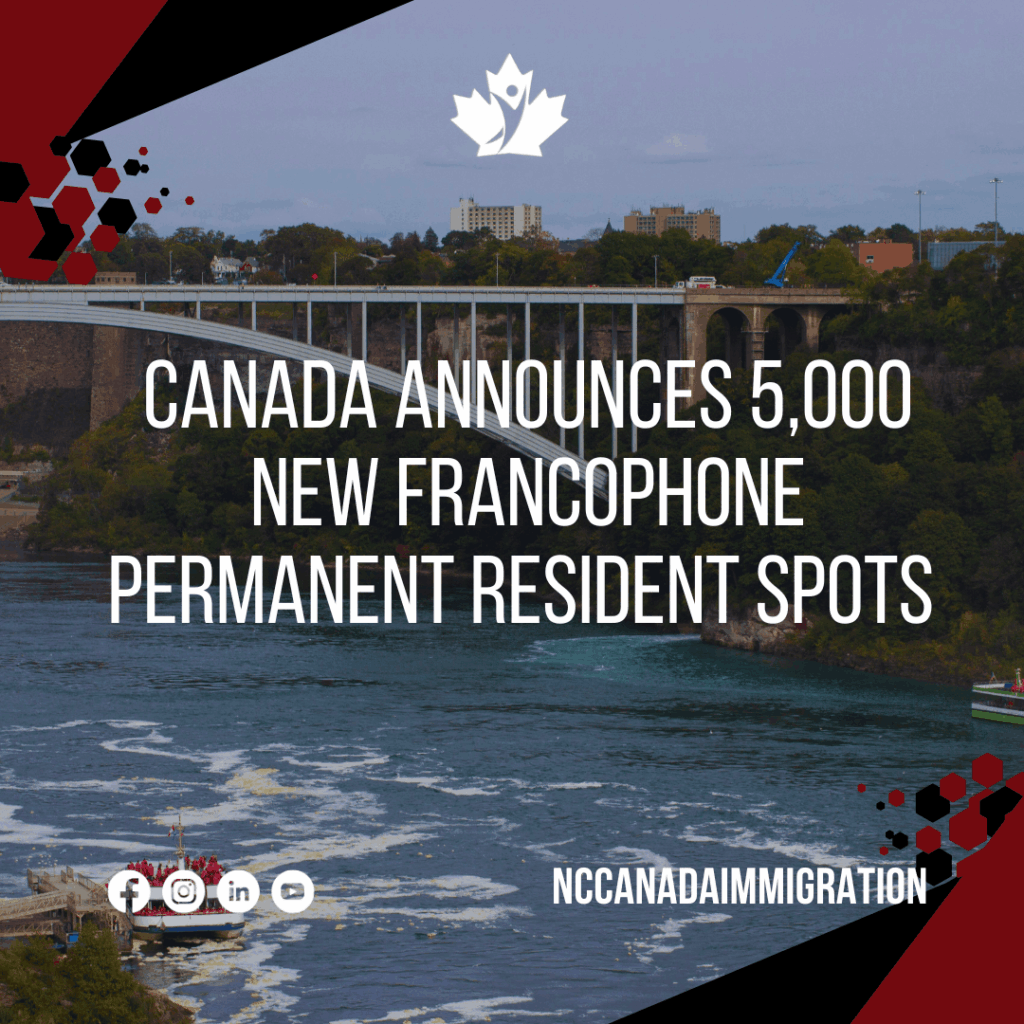
In a recent press conference, Immigration Minister Lena Metlege Diab announced on January 19, 2026, that Canada is making it significantly easier and faster for French-speaking immigrants to get permanent residence by adding 5,000 dedicated spots specifically for them through provincial programs.
What’s Changing
IRCC is reserving these 5,000 Permanent Resident admission spots from federal selection spaces and adding them to provinces and territories’ existing immigration allocations. This means more opportunities for French-speaking candidates through:
- Provincial Nominee Programs (PNPs)
- Regional and rural immigration programs
- Community-based immigration pathways
Refer to the table below for a summary of the changes:
| Key Changes | Description | Advantage |
|---|---|---|
| Expansion Beyond Federal Programs | Before: French speakers mainly benefited through the federal Express Entry.
Now: French speakers can also get dedicated spots in provincial programs (PNPs and regional pilots). |
More pathways mean more opportunities for permanent residency. |
| Dedicated Spots for French Speakers | These 5,000 spots are separate from general provincial quotas. | Higher chance of selection with less competition. |
| Provincial Flexibility | Provinces now have a dedicated capacity to invite French speakers.
Provinces can either: |
More frequent invitations and potentially easier requirements. |
Understanding the Francophone Immigration Advantage
Outside Quebec, Canada needs French speakers to maintain their bilingual identity. This became a challenge for the government but an opportunity for French speakers to access immigration pathways that are unavailable to general applicants.
Lower Express Entry Requirements
A review of French-language category draws held in 2025 showed significantly lower CRS cut-off scores compared to other draw types. For example, last year’s French language proficiency draws had cut-off scores ranging from 379-481 points with a total of 42,000 invitations.
Refer to the table below for a summary of French-language category-based draws:
| Date | Number of ITAs | Cut-off CRS Score |
|---|---|---|
| November 28, 2025 | 6,000 | 408 |
| October 29, 2025 | 6,000 | 416 |
| October 6, 2025 | 4,500 | 432 |
| September 4, 2025 | 4,500 | 446 |
| August 8, 2025 | 2,500 | 481 |
| March 21, 2025 | 7,500 | 379 |
| March 6, 2025 | 4,500 | 410 |
| February 19, 2025 | 6,500 | 428 |
Dedicated Provincial Allocations
The 5,000 new French permanent resident spots are separate from general provincial quotas. When provinces nominate candidates through the Provincial Nominee Program, French speakers compete only against other French speakers for these dedicated spots, not against the entire applicant pool. A smaller competition pool means higher chances of selection.
LMIA-Exempt Work Permits
Normally, Canadian employers must secure a Labour Market Impact Assessment (LMIA) to hire foreign workers. An LMIA is a costly, months-long process to prove no Canadian can do the job, but the Francophone Mobility Program waives this requirement for French speakers, making employers far more willing to hire from abroad.
Settlement Support
Upon acceptance for permanent residence, 24 designated Francophone communities across Canada provide government-funded services entirely in French. Candidates can access support to help them settle comfortably, including:
- Job placement agencies
- Housing search assistance
- Credential recognition support
- Language classes
Local francophone organizations assist with finding employment in French-speaking workplaces, connecting with French-speaking neighbours, and navigating government services.
The 3 Key Pathways for French Speakers
1. Express Entry with French proficiency
French speakers can access Category-Based Draws in Express Entry for lower requirements and additional points for language proficiency. Fully bilingual candidates can accumulate 210 CRS points from language skills plus skills transferability factors, compared to 124 points for English-only candidates.
2. Provincial Nominee Programs with Francophone Streams
With the 5,000 permanent residence spots distributed to provinces, more opportunities will be made available through Provincial Nominee Programs. Ontario’s French-Speaking Skilled Worker Stream is one of the most accessible options.
3. Federal Programs Specifically for Francophones
Beyond Express Entry and PNPs, French-speaking candidates can benefit from federal initiatives designed to support their immigration process. Through the Francophone Mobility Program, applicants can obtain a work permit without needing a Labour Market Impact Assessment (LMIA), allowing them to build Canadian work experience that strengthens their future permanent residency application.
Is the Francophone Route Right for You?
The Francophone pathway offers the strongest advantage if you need to boost your CRS score to become competitive.
You’ll benefit most from this route if:
- You don’t have a job offer
- You aren’t currently eligible for other Provincial Nominee Program (PNP) streams
- You are willing to invest time in reaching NCLC 7 proficiency
- You are currently in the Express Entry pool and have a low CRS score
If you’re unsure which route fits your timeline and qualifications, a professional assessment can help you make an informed decision and avoid investing time in the wrong pathway.
How We Can Help You Get Started
If you’re a French speaker or willing to learn the language, we can help you assess your situation and your options to see how you may benefit from additional immigration programs with the French advantage. However, if this pathway isn’t right for you, we’ll explore alternative immigration options that can better align with your goals and timeline.
Schedule a personalized one-on-one consultation with one of our experienced immigration consultants. We will assess your situation and guide you through the application process.
Contact us today to book your consultation and secure your path to success in Canada.
The Team at Northern Connections Canada.